Flavorful Bibimbap Rice Bowl Recipe with Easy Spicy Gochujang Sauce
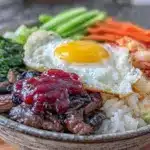
A vibrant and comforting Korean-inspired rice bowl featuring a mix of fresh veggies, perfectly cooked rice, and a bold yet approachable spicy gochujang sauce. Ready in about 30 minutes, it’s perfect for a quick, nourishing meal.
- Prep Time: 10 minutes
- Cook Time: 20 minutes
- Total Time: 30 minutes
- Yield: 2 servings 1x
- Category: Main Course
- Cuisine: Korean
Ingredients
- 1 1/2 cups short-grain white rice (or sushi rice for stickier texture)
- 2 cups water (for cooking rice)
- 1 cup spinach, blanched and squeezed dry
- 1 medium carrot, julienned or thinly sliced
- 1 cup bean sprouts, blanched
- 1/2 cup shiitake or button mushrooms, sliced
- 1 small zucchini, thinly sliced
- 2 large eggs (for frying sunny side up)
- 2 teaspoons sesame oil (to toss the veggies)
- 3 tablespoons gochujang (Korean chili paste)
- 1 tablespoon soy sauce (or tamari for gluten-free)
- 1 tablespoon rice vinegar
- 1 tablespoon honey or sugar (balances the heat)
- 1 teaspoon sesame oil (adds nuttiness)
- 1 clove garlic, minced
- 1 teaspoon toasted sesame seeds (optional, for garnish)
- Optional protein add-ins:
- 4 ounces ground beef or thinly sliced beef bulgogi-style, seasoned and cooked
- Or tofu, pressed and pan-fried for a vegetarian option
Instructions
- Rinse 1 1/2 cups of short-grain rice under cold water until water runs clear. Combine rice and 2 cups of water in a saucepan or rice cooker. Cook according to your rice cooker’s instructions or bring to a boil, then reduce heat to low, cover, and simmer for 15 minutes. Remove from heat and let it sit covered for 10 minutes to steam. Fluff with a fork before serving.
- While rice cooks, blanch spinach and bean sprouts separately in boiling water for about 1 minute each. Drain and squeeze out excess water, then toss both with 1 teaspoon sesame oil and a pinch of salt.
- Heat 1 teaspoon sesame oil in a skillet over medium heat. Add sliced carrots, sauté for 2-3 minutes until slightly softened. Add zucchini and mushrooms, cook for another 3-4 minutes until tender but still vibrant. Season lightly with salt and pepper. Remove from heat and set aside.
- If using beef or tofu, cook in skillet over medium-high heat until browned and cooked through. Season with a splash of soy sauce for extra flavor. Set aside.
- In a small bowl, whisk together 3 tablespoons gochujang, 1 tablespoon soy sauce, 1 tablespoon rice vinegar, 1 tablespoon honey, 1 teaspoon sesame oil, and minced garlic until smooth. Taste and adjust sweetness or acidity as desired.
- In a nonstick skillet, heat a little oil over medium heat. Crack in eggs and cook sunny-side up until whites are set but yolks remain runny, about 2-3 minutes. Sprinkle lightly with salt.
- Divide the cooked rice between bowls. Arrange the sautéed vegetables, blanched spinach, bean sprouts, and protein (if using) around the edges. Place the fried egg on top in the center. Drizzle a generous spoonful of spicy gochujang sauce over everything, then sprinkle with toasted sesame seeds if you like.
- Just before eating, mix all the ingredients together so the sauce coats everything evenly. Enjoy the layers of flavor and texture!
Notes
Rinse rice thoroughly to remove excess starch for fluffy grains. Blanch greens separately to keep bright color and fresh bite. Adjust gochujang amount to control spiciness. Fry eggs last to keep them warm and fresh. Sauce can be made ahead and stored in fridge for up to a week. For vegan version, skip eggs and replace honey with maple syrup or agave nectar. Use tamari instead of soy sauce for gluten-free option.
Nutrition
- Serving Size: 1 bowl
- Calories: 550
- Sugar: 10
- Sodium: 700
- Fat: 18
- Saturated Fat: 4
- Carbohydrates: 70
- Fiber: 6
- Protein: 20
Keywords: bibimbap, Korean rice bowl, gochujang sauce, spicy sauce, easy Korean recipe, healthy rice bowl, vegetarian bibimbap, gluten-free bibimbap