Introduction
“You seriously have to try this,” my coworker said, sliding a container of leftovers across the break room table. I glanced inside and saw a vibrant mix of rice, veggies, and a glossy red sauce. Honestly, I was skeptical—Korean flavors weren’t in my usual rotation, and spicy sauces usually intimidated me. But that first bite was a surprise. The spicy gochujang sauce wasn’t just heat; it was balanced with a touch of sweetness and a deep, earthy richness. It was the kind of dish that made you slow down and savor every forkful.
That lunch sparked a week-long obsession where I kept tweaking my own version of the bibimbap rice bowl at home. I tried different veggies, swapped rice types, and yes, adjusted the gochujang sauce until it hit just the right note—bold but approachable. What stuck with me wasn’t just the flavors but how this dish felt like a little moment of calm and comfort on a busy day. It’s a colorful bowl, packed with textures and layers, that somehow manages to be both nourishing and exciting.
Over time, this flavorful bibimbap rice bowl with spicy gochujang sauce became one of those recipes I’d pull out when I needed a reliable, no-fuss meal that still felt special. It’s perfect for those evenings when you want something satisfying but don’t want to slave over the stove. And honestly? Once you get the sauce right, everything else just falls into place—and you’ll find yourself coming back to it again and again.
Why You’ll Love This Recipe
After testing this bibimbap rice bowl recipe multiple times (yes, sometimes twice in a week), I can say it’s a winner for so many reasons. Here’s why it’s worth having in your meal arsenal:
- Quick & Easy: Ready in about 30 minutes, this recipe is great for busy weeknights or when you want a flavorful meal fast.
- Simple Ingredients: Most of the ingredients are pantry staples or easy to find—no need for specialty stores.
- Perfect for Any Occasion: Whether you’re cooking for yourself, family dinners, or casual get-togethers, this bibimbap bowl fits right in.
- Crowd-Pleaser: The mix of spicy, savory, and fresh flavors means both kids and adults tend to love it.
- Unbelievably Delicious: The spicy gochujang sauce is the star—creamy, tangy, and with just the right kick to keep things interesting.
This recipe stands apart because of the homemade spicy gochujang sauce that’s balanced and easy to make without hunting down hard-to-find ingredients. It’s not just slathered on; it’s thoughtfully mixed in to coat every bite with flavor. Plus, the fresh veggies and perfectly cooked rice add texture and freshness that make it feel like a complete, satisfying meal. This isn’t just a bowl of rice and sauce—it’s a vibrant, comforting dish that’s as pretty as it is tasty. It’s the kind of recipe that makes you close your eyes after the first bite and smile, knowing you nailed it.
What Ingredients You Will Need
This bibimbap rice bowl recipe uses simple, wholesome ingredients to deliver bold flavor and satisfying texture without fuss. Most are easy to find in your local grocery store or might already be in your kitchen.
- For the Bibimbap Base:
- 1 1/2 cups short-grain white rice (or sushi rice for stickier texture)
- 2 cups water (for cooking rice)
- 1 cup spinach, blanched and squeezed dry
- 1 medium carrot, julienned or thinly sliced
- 1 cup bean sprouts, blanched
- 1/2 cup shiitake or button mushrooms, sliced
- 1 small zucchini, thinly sliced
- 2 large eggs (for frying sunny side up)
- 2 teaspoons sesame oil (to toss the veggies)
- For the Spicy Gochujang Sauce:
- 3 tablespoons gochujang (Korean chili paste) – I like Chung Jung One brand for authentic flavor
- 1 tablespoon soy sauce (or tamari for gluten-free)
- 1 tablespoon rice vinegar
- 1 tablespoon honey or sugar (balances the heat)
- 1 teaspoon sesame oil (adds nuttiness)
- 1 clove garlic, minced
- 1 teaspoon toasted sesame seeds (optional, for garnish)
- Optional Protein Add-ins:
- 4 ounces ground beef or thinly sliced beef bulgogi-style, seasoned and cooked
- Or tofu, pressed and pan-fried for a vegetarian option
If you want a gluten-free option, make sure to use tamari instead of regular soy sauce. For a vegan version, skip the eggs and swap honey with maple syrup or agave nectar. In summer, fresh greens like cucumbers or radishes can brighten the bowl even more.
Equipment Needed
- Medium saucepan or rice cooker (for perfectly cooked rice)
- Large skillet or frying pan (for sautéing vegetables and cooking protein)
- Small bowl (to whisk together the spicy gochujang sauce)
- Spatula and wooden spoon (for stirring and flipping)
- Fine mesh strainer (optional, for rinsing rice)
- Cutting board and sharp knife (for prepping veggies)
You don’t need any fancy kitchen gadgets here. I usually make the rice in my trusty rice cooker, but a pot with a tight-fitting lid works just fine. When frying the eggs, a nonstick pan makes life easier, but a well-seasoned cast iron skillet works beautifully as well. For tossing the veggies, a large skillet with high sides helps keep everything contained. And if you’re curious about kitchen tools, I’ve shared some tips in my crispy oven-fried buttermilk chicken tenders post that can come in handy for prepping and cooking proteins.
Preparation Method
- Cook the Rice: Rinse 1 1/2 cups of short-grain rice under cold water until water runs clear. Combine rice and 2 cups of water in a saucepan or rice cooker. Cook according to your rice cooker’s instructions or bring to a boil, then reduce heat to low, cover, and simmer for 15 minutes. Remove from heat and let it sit covered for 10 minutes to steam. Fluff with a fork before serving.
- Prepare the Vegetables: While rice cooks, blanch spinach and bean sprouts separately in boiling water for about 1 minute each. Drain and squeeze out excess water, then toss both with 1 teaspoon sesame oil and a pinch of salt.
- Sauté Carrots, Zucchini & Mushrooms: Heat 1 teaspoon sesame oil in a skillet over medium heat. Add sliced carrots, sauté for 2-3 minutes until slightly softened. Add zucchini and mushrooms, cook for another 3-4 minutes until tender but still vibrant. Season lightly with salt and pepper. Remove from heat and set aside.
- Cook the Protein (Optional): If using beef or tofu, cook in skillet over medium-high heat until browned and cooked through. Season with a splash of soy sauce for extra flavor. Set aside.
- Make the Spicy Gochujang Sauce: In a small bowl, whisk together 3 tablespoons gochujang, 1 tablespoon soy sauce, 1 tablespoon rice vinegar, 1 tablespoon honey, 1 teaspoon sesame oil, and minced garlic until smooth. Taste and adjust sweetness or acidity as desired.
- Fry the Eggs: In a nonstick skillet, heat a little oil over medium heat. Crack in eggs and cook sunny-side up until whites are set but yolks remain runny, about 2-3 minutes. Sprinkle lightly with salt.
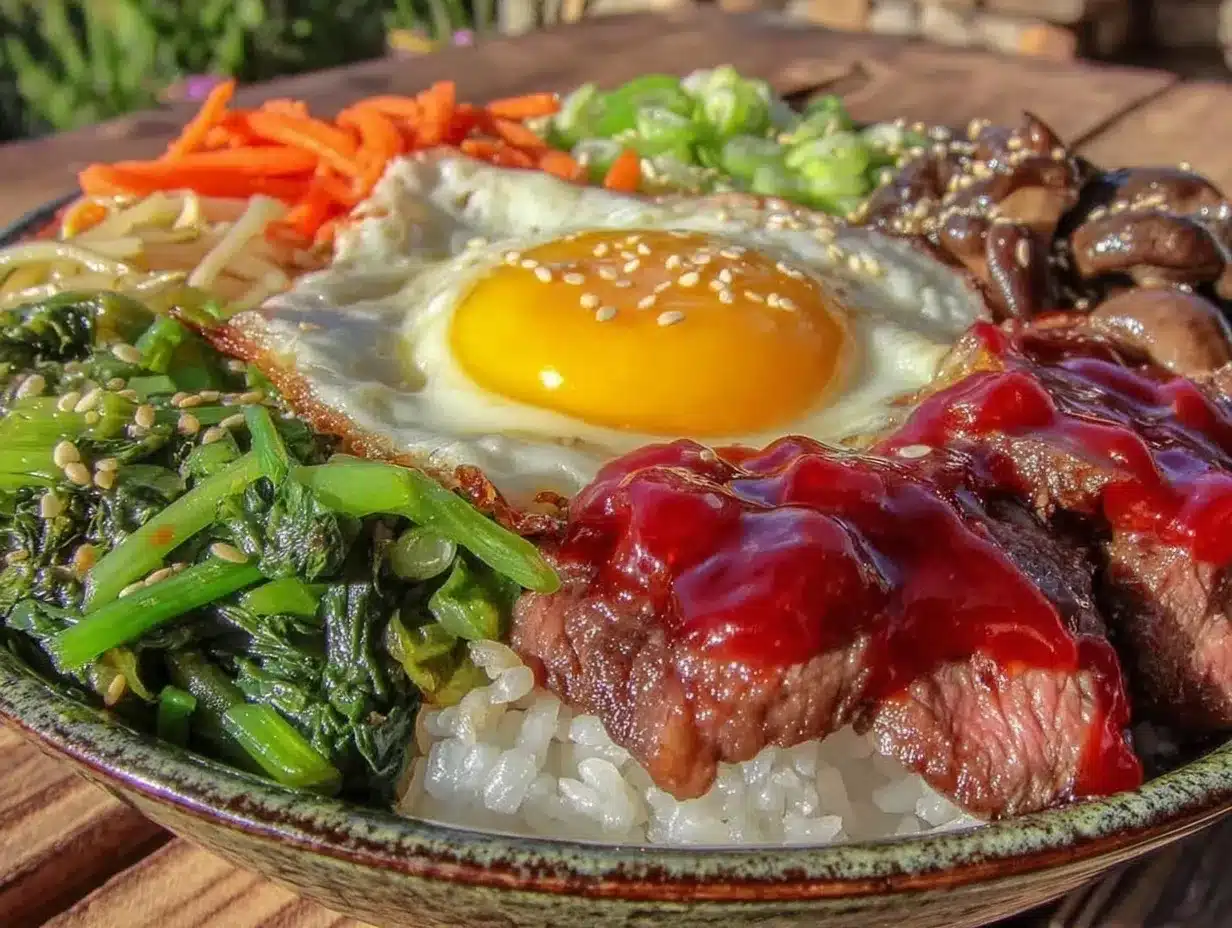
- Assemble the Bibimbap Bowl: Divide the cooked rice between bowls. Arrange the sautéed vegetables, blanched spinach, bean sprouts, and protein (if using) around the edges. Place the fried egg on top in the center. Drizzle a generous spoonful of spicy gochujang sauce over everything, then sprinkle with toasted sesame seeds if you like.
- Final Touch: Just before eating, mix all the ingredients together so the sauce coats everything evenly. Enjoy the layers of flavor and texture!
Note: If you find the sauce too spicy, start with less gochujang and add gradually. The key is balancing heat with sweet and savory tones. Also, letting the veggies keep a bit of crunch adds a nice contrast to the soft rice and egg.
Cooking Tips & Techniques
One trick I learned is to rinse the rice thoroughly to remove excess starch—that way, the rice grains stay separate and fluffy instead of clumping together. Patience with the rice steaming step makes a big difference. Also, blanching the greens separately keeps their bright color and fresh bite, which is essential for that classic bibimbap texture.
When cooking the vegetables, don’t overdo it. You want them tender but still a little crisp to contrast with the softness of the rice and egg. Using sesame oil for sautéing adds a gentle nuttiness that lifts the whole bowl.
For the gochujang sauce, mixing in honey or sugar is crucial to tame the heat and give the sauce a rounded flavor. If you’re wary of spice, start with less gochujang and adjust after tasting. I often make a double batch of this sauce to keep in the fridge for drizzling over dishes like my honey garlic pork chops or even simple roasted veggies.
Timing-wise, prep all your veggies before starting the rice. That way, you can multitask and have everything ready to assemble at the same time. Also, frying eggs last ensures they’re warm and fresh when served.
Variations & Adaptations
- Vegetarian/Vegan: Skip the egg and replace beef with pan-fried tofu or tempeh. Use maple syrup instead of honey in the sauce.
- Low-Carb: Swap rice for cauliflower rice or shirataki rice to cut carbs but keep the bowl’s spirit.
- Seasonal Veggies: In spring, add blanched asparagus or snap peas. In fall, roasted sweet potatoes or kimchi bring cozy flavors.
- Spicy Level Adjustments: For milder taste, reduce gochujang or substitute with a sweet chili sauce. For more heat, sprinkle crushed red pepper flakes or add a drizzle of chili oil.
- Different Protein Options: Ground chicken, shrimp, or even leftover roasted veggies can replace beef depending on what you have on hand.
I personally love adding a handful of kimchi on the side for an extra punch of tangy spice. It adds a fermented crunch that pairs beautifully with the creamy egg yolk and spicy sauce. If you’re curious about easy kimchi recipes or want a warm soup to go alongside, you might enjoy my creamy slow cooker potato soup which is soothing and hearty.
Serving & Storage Suggestions
Serve your bibimbap rice bowl warm, right after assembling, so the egg yolk is still runny and mixes with everything for that rich, silky texture. Presentation-wise, arranging the veggies in colorful sections around the rice before topping with egg and sauce makes it visually inviting.
This bowl pairs well with simple side dishes like steamed edamame, pickled vegetables, or a crisp cucumber salad. For drinks, a cold barley tea or light lager complements the spicy and savory flavors nicely.
Leftovers store well in an airtight container in the fridge for up to 2 days. To reheat, microwave until warm, then add a fresh fried egg on top if you like. The flavors often deepen after resting, making it even tastier the next day.
Nutritional Information & Benefits
This bibimbap rice bowl recipe offers a balanced meal with carbohydrates from rice, fiber and vitamins from fresh veggies, protein from eggs and beef or tofu, and healthy fats from sesame oil. Gochujang contains fermented ingredients that may support gut health, while the veggies provide antioxidants.
It’s naturally gluten-free if you use tamari instead of soy sauce, and can easily be adjusted to vegan or low-carb diets. The mix of fresh and cooked ingredients makes it nourishing without feeling heavy—a satisfying meal that keeps you energized.
Conclusion
This flavorful bibimbap rice bowl with spicy gochujang sauce has become one of my go-to meals when I want something comforting, colorful, and packed with flavor without a lot of fuss. It’s a dish that invites you to customize, so feel free to swap in your favorite veggies or proteins and adjust the spice to your liking.
What I love most about this recipe is how it brings a little bit of Korea into my kitchen in a way that’s approachable and delicious every single time. Plus, it’s a fun bowl to mix up with friends or family—everyone gets to personalize their bite! If you try it out, I’d love to hear how you make it your own.
Happy cooking and enjoy savoring every bite!
Frequently Asked Questions about Bibimbap Rice Bowl
What is the best rice to use for bibimbap?
Short-grain white rice or sushi rice works best because it’s sticky enough to hold the bowl together but still fluffy. Avoid long-grain rice as it tends to be too dry.
Can I make the gochujang sauce ahead of time?
Yes! The sauce keeps well in the fridge for up to a week and tastes even better once the flavors meld. Just give it a quick stir before serving.
How spicy is gochujang? Can I substitute it?
Gochujang has a moderate heat with a sweet and savory flavor. If you want less spice, use less gochujang or substitute with a mild chili paste or sweet chili sauce.
Is bibimbap typically served with an egg?
Yes, a fried egg with a runny yolk is traditional and adds richness. But you can skip it or use a poached egg or tofu if you prefer.
What veggies can I use if I don’t have the ones listed?
You can use almost any fresh or cooked vegetables you like—cucumbers, bell peppers, radishes, or even roasted sweet potatoes work great. The key is variety in color and texture.
Pin This Recipe!
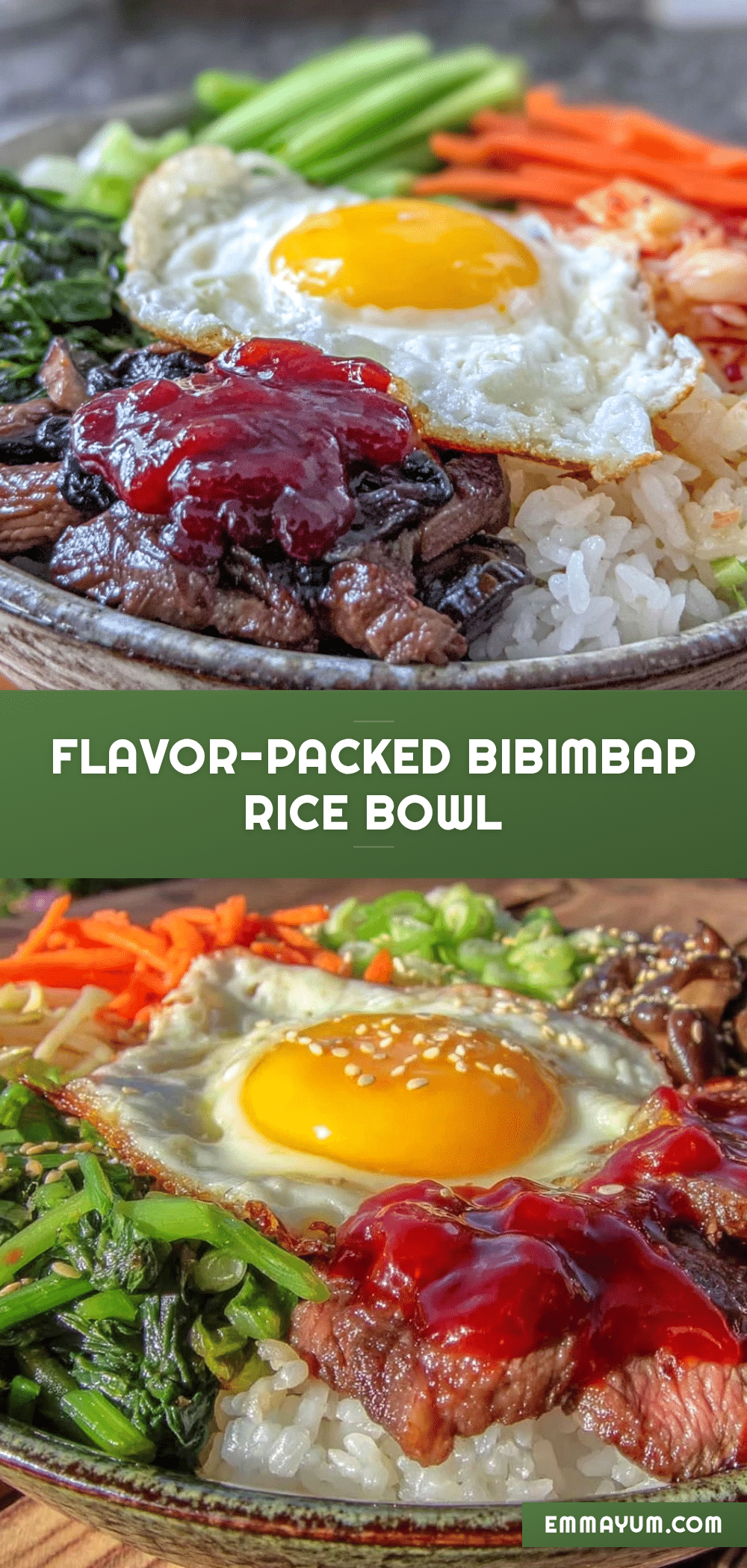
Flavorful Bibimbap Rice Bowl Recipe with Easy Spicy Gochujang Sauce
A vibrant and comforting Korean-inspired rice bowl featuring a mix of fresh veggies, perfectly cooked rice, and a bold yet approachable spicy gochujang sauce. Ready in about 30 minutes, it’s perfect for a quick, nourishing meal.
- Prep Time: 10 minutes
- Cook Time: 20 minutes
- Total Time: 30 minutes
- Yield: 2 servings 1x
- Category: Main Course
- Cuisine: Korean
Ingredients
- 1 1/2 cups short-grain white rice (or sushi rice for stickier texture)
- 2 cups water (for cooking rice)
- 1 cup spinach, blanched and squeezed dry
- 1 medium carrot, julienned or thinly sliced
- 1 cup bean sprouts, blanched
- 1/2 cup shiitake or button mushrooms, sliced
- 1 small zucchini, thinly sliced
- 2 large eggs (for frying sunny side up)
- 2 teaspoons sesame oil (to toss the veggies)
- 3 tablespoons gochujang (Korean chili paste)
- 1 tablespoon soy sauce (or tamari for gluten-free)
- 1 tablespoon rice vinegar
- 1 tablespoon honey or sugar (balances the heat)
- 1 teaspoon sesame oil (adds nuttiness)
- 1 clove garlic, minced
- 1 teaspoon toasted sesame seeds (optional, for garnish)
- Optional protein add-ins:
- 4 ounces ground beef or thinly sliced beef bulgogi-style, seasoned and cooked
- Or tofu, pressed and pan-fried for a vegetarian option
Instructions
- Rinse 1 1/2 cups of short-grain rice under cold water until water runs clear. Combine rice and 2 cups of water in a saucepan or rice cooker. Cook according to your rice cooker’s instructions or bring to a boil, then reduce heat to low, cover, and simmer for 15 minutes. Remove from heat and let it sit covered for 10 minutes to steam. Fluff with a fork before serving.
- While rice cooks, blanch spinach and bean sprouts separately in boiling water for about 1 minute each. Drain and squeeze out excess water, then toss both with 1 teaspoon sesame oil and a pinch of salt.
- Heat 1 teaspoon sesame oil in a skillet over medium heat. Add sliced carrots, sauté for 2-3 minutes until slightly softened. Add zucchini and mushrooms, cook for another 3-4 minutes until tender but still vibrant. Season lightly with salt and pepper. Remove from heat and set aside.
- If using beef or tofu, cook in skillet over medium-high heat until browned and cooked through. Season with a splash of soy sauce for extra flavor. Set aside.
- In a small bowl, whisk together 3 tablespoons gochujang, 1 tablespoon soy sauce, 1 tablespoon rice vinegar, 1 tablespoon honey, 1 teaspoon sesame oil, and minced garlic until smooth. Taste and adjust sweetness or acidity as desired.
- In a nonstick skillet, heat a little oil over medium heat. Crack in eggs and cook sunny-side up until whites are set but yolks remain runny, about 2-3 minutes. Sprinkle lightly with salt.
- Divide the cooked rice between bowls. Arrange the sautéed vegetables, blanched spinach, bean sprouts, and protein (if using) around the edges. Place the fried egg on top in the center. Drizzle a generous spoonful of spicy gochujang sauce over everything, then sprinkle with toasted sesame seeds if you like.
- Just before eating, mix all the ingredients together so the sauce coats everything evenly. Enjoy the layers of flavor and texture!
Notes
Rinse rice thoroughly to remove excess starch for fluffy grains. Blanch greens separately to keep bright color and fresh bite. Adjust gochujang amount to control spiciness. Fry eggs last to keep them warm and fresh. Sauce can be made ahead and stored in fridge for up to a week. For vegan version, skip eggs and replace honey with maple syrup or agave nectar. Use tamari instead of soy sauce for gluten-free option.
Nutrition
- Serving Size: 1 bowl
- Calories: 550
- Sugar: 10
- Sodium: 700
- Fat: 18
- Saturated Fat: 4
- Carbohydrates: 70
- Fiber: 6
- Protein: 20
Keywords: bibimbap, Korean rice bowl, gochujang sauce, spicy sauce, easy Korean recipe, healthy rice bowl, vegetarian bibimbap, gluten-free bibimbap