There’s something magical about the aroma of sizzling beef mingling with garlic and ginger—especially when it’s destined for a Savory Korean Beef Bowl with Tangy Kimchi. Imagine the rich, mouthwatering scent wrapping around you as the soy sauce caramelizes in the pan, wafting through the kitchen and practically announcing dinner is going to be unforgettable. The first time I made this, I was trying to recreate a dish I’d tasted at a bustling Korean food stall downtown. You know the kind—where the steam rises from each bowl, and you can almost taste the excitement in the air. I was instantly hooked, and honestly, I paused after that first bite, just smiling, because I knew I’d stumbled onto something that felt like pure comfort. Not the kind of meal that’s fussy or pretentious, but a bowl that feels like home (even if you didn’t grow up with gochujang in the pantry).
When I was knee-high to a grasshopper, family meals were about coming together over simple, satisfying flavors. Years ago, I wish I’d known how easy it was to bring those big, bold tastes into my own kitchen. This Savory Korean Beef Bowl recipe is a nod to that: it’s dangerously easy, bursting with savory, sweet, and spicy notes, and topped with tangy kimchi that brings the whole thing to life. My family couldn’t stop sneaking bites straight from the pan, and my kids declared it “the best dinner ever”—not bad for something that takes just half an hour!
Let’s face it, it’s the kind of meal that checks all the boxes. Perfect for busy weeknights, potlucks, or whenever you need a little pick-me-up. It’s a Pinterest-worthy bowl that’s loaded with color, flavor, and a bit of nostalgia. I tested this recipe more times than I’ll admit (in the name of research, of course), and now it’s a staple for family gatherings, meal prep, and even gifting dinner to friends who need a lift. If you love meals that feel like a warm hug and taste like a culinary adventure, you’re going to want to bookmark this one.
Why You’ll Love This Savory Korean Beef Bowl with Tangy Kimchi
Let me tell you, this Savory Korean Beef Bowl recipe isn’t just another dinner idea—it’s a game-changer for anyone who wants big flavor without a big fuss. I’ve spent years tweaking this dish to make it both foolproof and full of personality. It’s chef-tested (by yours truly) and family-approved, and it’s become my go-to for nights when I want something tasty, quick, and a little bit special.
- Quick & Easy: Ready in just 30 minutes—no need to plan ahead or slave away, so you can whip this up even on the busiest evenings.
- Simple Ingredients: Everything you need is probably already sitting in your kitchen—no wild goose chases for hard-to-find items (unless you count kimchi, which is easy to find at most grocery stores these days).
- Perfect for Any Occasion: This bowl works for casual dinners, last-minute guests, meal prep lunches, or even potlucks. It’s versatile enough for any setting!
- Crowd-Pleaser: Kids love the sweet-savory beef, adults crave the tangy kimchi, and everyone goes back for seconds. It’s one of those rare dishes that bridges the generational gap.
- Unbelievably Delicious: The beef is tender and juicy, the sauce is packed with umami, and the kimchi adds a crave-worthy punch that takes things to the next level.
What really sets this Savory Korean Beef Bowl apart is the special technique I use—finely chopping the green onions and blooming the ginger and garlic in oil before adding the beef. This gives every bite an extra layer of depth, and honestly, it’s the secret to making this bowl taste like something from a street market in Seoul. Plus, I balance the sauce just right: sweet, salty, and a hint of heat from gochujang (if you want it). You can make this dish low-carb or gluten-free with easy swaps, so it fits almost any diet without sacrificing flavor.
This isn’t just dinner—it’s the kind of meal that makes you close your eyes after the first bite. Comfort food, but with a kick. It’s healthier, faster, and still delivers that soul-soothing satisfaction. If you want to wow guests or simply treat yourself to something memorable, this recipe won’t let you down.
What Ingredients You Will Need
This Savory Korean Beef Bowl uses wholesome, everyday ingredients to create bold flavor and irresistible texture. You don’t need fancy stuff—just a few pantry staples, fresh veggies, and your favorite kimchi. Here’s what you’ll need (and a few tips I’ve learned along the way):
- For the Beef:
- 1 lb (450g) ground beef (I prefer 85% lean for the best balance of flavor and juiciness)
- 2 tablespoons vegetable oil (can use sesame oil for extra depth—my go-to!)
- 4 cloves garlic, minced
- 2-inch piece fresh ginger, peeled and grated (about 2 tablespoons)
- 1/2 cup (50g) green onions, finely chopped (plus more for garnish)
- For the Sauce:
- 1/3 cup (80ml) soy sauce (I like Kikkoman for its deep flavor; use tamari for gluten-free)
- 2 tablespoons brown sugar (or coconut sugar for a lower glycemic option)
- 1 tablespoon gochujang (Korean red chili paste; optional for heat)
- 1 tablespoon rice vinegar (balances the savory beef beautifully)
- 1 tablespoon toasted sesame oil
- 1 teaspoon crushed red pepper flakes (optional)
- For Serving:
- 2 cups (400g) cooked white rice (short grain is best for sticky texture, but jasmine works too)
- 1 cup (150g) kimchi (store-bought or homemade; I usually grab Mother-in-Law’s brand)
- 1 medium cucumber, thinly sliced (adds crunch and freshness)
- 1 large carrot, julienned or shredded (for a sweet, crisp note)
- 1 tablespoon toasted sesame seeds (optional, but so good for nutty flavor)
- Optional Toppings:
- Fried egg (per bowl, for extra protein and richness—my kids beg for this addition!)
- Sriracha or extra gochujang (if you like it spicy)
- Nori strips (for a salty, umami crunch)
If you’re vegetarian, swap the beef for crumbled tofu or plant-based ground “meat.” For low-carb, use cauliflower rice. If you’re dairy-free, you’re in luck—this dish is naturally free of milk products. And honestly, don’t stress if you’re missing one veggie; just use what you have. The magic is in the beef and sauce combo with tangy kimchi on top!
Equipment Needed
You don’t need a commercial kitchen to make this Savory Korean Beef Bowl—just a handful of trusty tools!
- Large Skillet or Wok: A heavy-bottomed skillet (I use a cast iron pan when I want a deep sear) or a high-sided wok works best for browning the beef and building flavor. Nonstick is fine if that’s what you have.
- Chef’s Knife & Cutting Board: For prepping garlic, ginger, onions, and veggies. A sharp knife makes the job way faster and safer (learned that the hard way, you know?).
- Wooden Spoon or Spatula: For stirring, breaking up beef, and mixing sauce. Silicone spatulas are great—easy to clean and gentle on pans.
- Measuring Cups & Spoons: To get the sauce balance just right. I’ve used everything from vintage metal to budget-friendly plastic sets, and they all get the job done.
- Rice Cooker or Saucepan: For cooking the rice. If you’re using cauliflower rice, a microwave-safe bowl works fine too.
If you don’t have a wok, don’t worry—a regular frying pan will do. Maintenance tip: if you use cast iron, wipe it down and oil lightly after cleaning to keep it from rusting. And for those on a budget, most kitchen stores have starter sets that work perfectly for this recipe.
Preparation Method
- Prep the Veggies:
- Wash and thinly slice 1 cucumber (about 120g) and julienne or shred 1 large carrot (about 80g). Set aside for topping.
- Finely chop 1/2 cup (50g) green onions. Mince 4 cloves garlic and grate 2-inch piece of ginger (about 2 tablespoons).
- Tip: Use a microplane for ginger—it saves time and gives a fine texture that melts into the beef.
- Make the Rice:
- Cook 2 cups (400g) short-grain white rice according to package instructions. For extra flavor, add a pinch of salt or a splash of rice vinegar when cooking.
- If using cauliflower rice, microwave or sauté until tender—takes about 5 minutes.
- Prepare the Sauce:
- In a small bowl, whisk together 1/3 cup (80ml) soy sauce, 2 tablespoons brown sugar, 1 tablespoon gochujang, 1 tablespoon rice vinegar, 1 tablespoon toasted sesame oil, and 1 teaspoon crushed red pepper flakes (if using).
- Taste and adjust heat or sweetness to your preference. I usually sneak in a little extra gochujang for myself.
- Cook the Beef:
- Heat 2 tablespoons vegetable oil in a large skillet or wok over medium-high heat.
- Add garlic and ginger, sauté for 30 seconds until fragrant. Then toss in green onions, cooking for another minute.
- Add 1 lb (450g) ground beef, breaking it up with a spoon. Cook until well-browned and no longer pink—about 6-8 minutes.
- If you notice excess fat, drain it off, but leave a little for flavor.
- Add the Sauce:
- Pour in the prepared sauce and stir well to coat beef. Simmer for 2-3 minutes until everything is glossy and the sauce thickens slightly.
- If the sauce seems too thin, raise the heat and stir continuously for another minute—it should cling to the beef.
- Tip: Taste at this stage and adjust seasoning (more soy sauce for salt, brown sugar for sweetness, gochujang for heat).
- Assemble the Bowls:
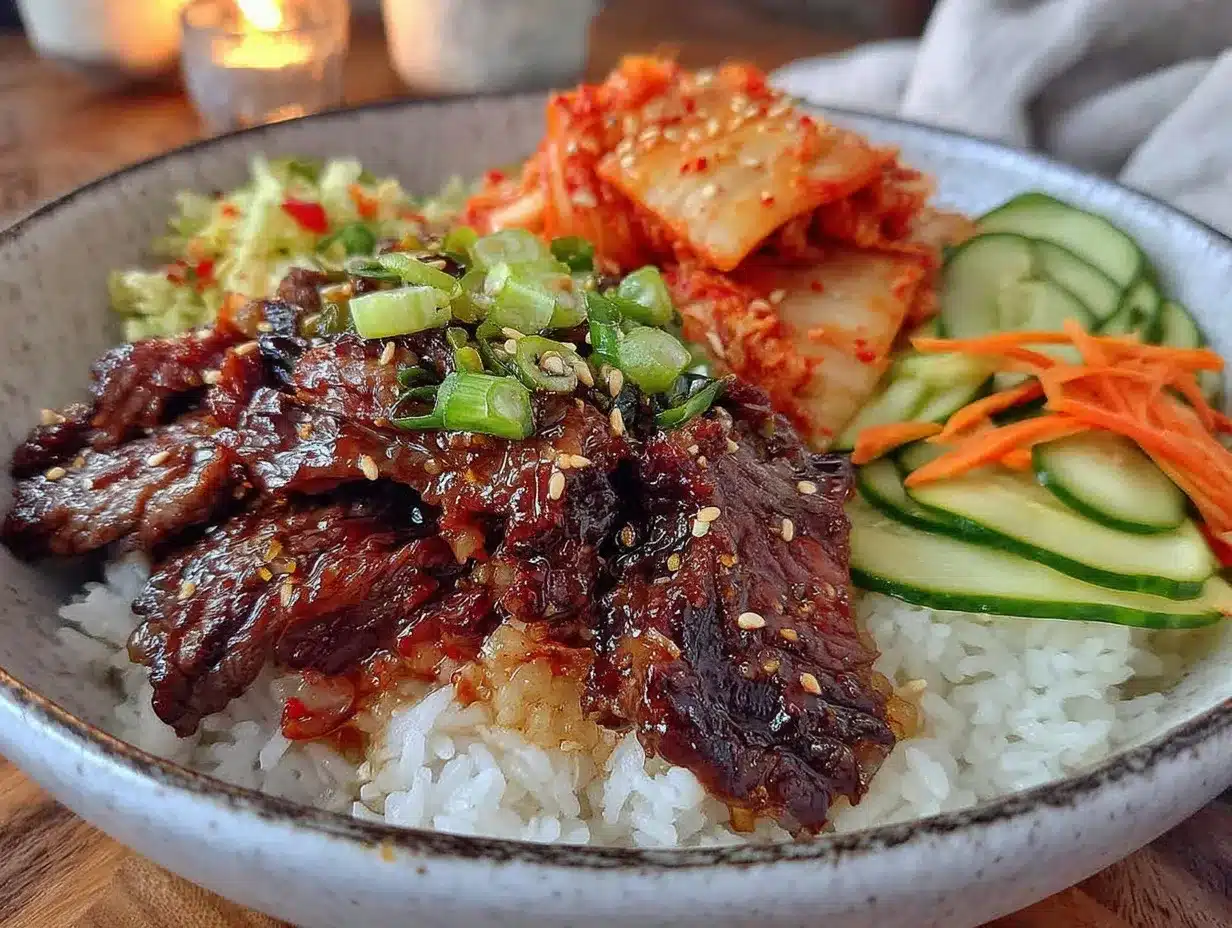
- Spoon rice into serving bowls (about 1/2 cup per bowl). Top each with a generous scoop of saucy beef.
- Add cucumber slices, shredded carrot, and a big spoonful of kimchi (about 1/4 cup per bowl).
- Optional: Add a fried egg, toasted sesame seeds, and nori strips for extra flavor and crunch.
- Garnish with extra green onions.
- Final Touch:
- Serve immediately while hot. The beef should be glossy, the kimchi vibrant, and the veggies crisp.
- Tip: If prepping ahead, keep toppings separate and assemble just before serving for best texture.
Common troubleshooting: If the beef turns out dry, try lowering the heat and adding a splash of water or broth with the sauce. If the sauce is too salty, add a teaspoon of honey or extra rice vinegar. Sensory cues are key—look for beef that’s caramelized and sauce that’s shiny!
Cooking Tips & Techniques
Cooking a Savory Korean Beef Bowl with Tangy Kimchi is all about timing, layering flavors, and paying attention to little details. Here are some hard-earned tips that’ll make your bowl truly shine!
- Browning Matters: Don’t rush the beef—let it get a nice sear before adding the sauce. If you crowd the pan, it’ll steam instead of caramelize. Learned this the messy way!
- Ginger and Garlic Bloom: Sautéing these aromatics in oil first unlocks incredible depth. Trust me, adding them after the beef just isn’t the same.
- Sauce Consistency: If your sauce is runny, cook it an extra minute or two. If it’s too thick, add a splash of water. Keep stirring; it’ll come together.
- Multitasking: Start your rice first, then prep veggies while the beef cooks. That way, everything’s ready at the same time (and you’re not left juggling hot pans).
- Toppings Are Key: Fresh veggies and kimchi balance the rich beef. Don’t skip these! I’ve made that mistake, and the bowl just isn’t as lively.
- Eggs for Extra Richness: A fried egg on top is optional but totally worth it. The runny yolk mixes into the beef and rice for an unforgettable bite.
- Consistency: Measure your sauce ingredients for repeatable results. I used to eyeball it, but a little too much soy or sugar can throw things off.
Some common pitfalls: using too lean beef (it’ll dry out), skipping the aromatics, or dumping all veggies into the skillet (keep them fresh for topping). With these tips, your Korean beef bowl will be restaurant-worthy every time.
Variations & Adaptations
One of the best things about this Savory Korean Beef Bowl recipe is how easily you can customize it. Here are my favorite twists and swaps:
- Vegetarian Version: Use crumbled extra-firm tofu or your favorite plant-based ground “meat” instead of beef. Add mushrooms for extra umami.
- Low-Carb or Keto: Swap white rice for cauliflower rice. You can also reduce or omit the brown sugar in the sauce—try monk fruit sweetener instead.
- Spicy Lovers: Double the gochujang or drizzle with sriracha. Add sliced jalapeños for even more heat.
- Allergen-Friendly: If you’re gluten-free, use tamari instead of soy sauce. For soy allergies, coconut aminos works well.
- Seasonal Switch: In summer, top with fresh cherry tomatoes or radish slices for extra crunch. In winter, add sautéed spinach or steamed broccoli.
- Personal Favorite: I love mixing a little pickled daikon in with the kimchi—adds a tangy, crunchy twist that’s addictively good!
Don’t be afraid to experiment with toppings or swap veggies based on what’s in the fridge. This recipe is flexible, and every variation I’ve tried has been a hit (even my picky eaters have found combos they love).
Serving & Storage Suggestions
This Savory Korean Beef Bowl with Tangy Kimchi is best served hot, straight from the skillet. The beef should be steaming, the rice fluffy, and the kimchi cold for contrast. Honestly, I love piling everything into a wide bowl so you get a bit of everything in each bite.
- Serving Temperature: Serve immediately while beef is hot and veggies are crisp.
- Presentation: Arrange toppings in neat rows or “piles” for that Instagram/Pinterest look! Garnish with sesame seeds and nori strips.
- Complementary Dishes: Pair with miso soup, steamed edamame, or a simple Asian cucumber salad.
- Beverage Pairings: Try cold green tea or a light lager. If you’re feeling fancy, Korean rice wine (makgeolli) is a fun touch.
For storage, keep beef and rice in separate airtight containers in the fridge—lasts up to 3 days. Veggies and kimchi can be stored separately as well. Reheat beef gently in a skillet; rice in the microwave with a damp paper towel to keep it moist. Flavors deepen overnight, so leftovers are even tastier!
Nutritional Information & Benefits
Each serving of this Savory Korean Beef Bowl (with rice and kimchi) packs about 500-600 calories, 28g protein, 55g carbs, and 20g fat. The beef provides iron and B vitamins, while kimchi delivers gut-friendly probiotics and vitamin C. Fresh veggies add fiber, color, and crunch.
This recipe is naturally dairy-free and can be made gluten-free with tamari. For low-carb, use cauliflower rice. If you’re watching sodium, opt for low-sodium soy sauce. Just a heads-up: kimchi and soy sauce do contain salt, so adjust if you need to. Personally, I love how this meal is balanced—protein, veggies, and fermented foods all in one bowl. It’s a wellness win that doesn’t feel like a sacrifice.
Conclusion
If you’re after a weeknight meal that’s comforting, quick, and a little bit exciting, you really can’t go wrong with this Savory Korean Beef Bowl with Tangy Kimchi. It’s loaded with flavor, endlessly adaptable, and so easy you’ll wonder why you didn’t try it sooner.
Make it your own—swap proteins, play with toppings, and adjust the heat to suit your family. That’s half the fun! Personally, I love how this recipe brings together bold Korean flavors and familiar comfort food vibes. My kitchen smells amazing whenever I make it, and the smiles at the table say it all.
If you give it a try, drop a comment below with your favorite twist, or share your bowl on Pinterest to inspire others. Recipes like this are meant to be shared—so let’s keep spreading the warmth, one bowl at a time!
FAQs
How spicy is the Savory Korean Beef Bowl?
The heat level depends on how much gochujang and red pepper flakes you use. You can easily adjust for mild or spicy preferences. My kids prefer it mild, so I go light on the chili!
Can I make this Korean beef bowl ahead?
Absolutely. Cook the beef and rice, store separately in the fridge, and reheat before serving. Add fresh veggies and kimchi right before eating for best texture.
Is this recipe gluten-free?
It can be! Just swap regular soy sauce for tamari or coconut aminos. Double-check your kimchi label—most are gluten-free, but some brands add wheat.
What’s the best meat substitution for vegetarians?
Extra-firm tofu or plant-based ground “meat” works great. I like adding sautéed mushrooms for extra umami flavor.
Can I freeze leftovers?
The beef mixture and rice freeze well for up to 2 months. Store veggies and kimchi separately (fresh is best). Reheat gently for a quick meal anytime!
Pin This Recipe!
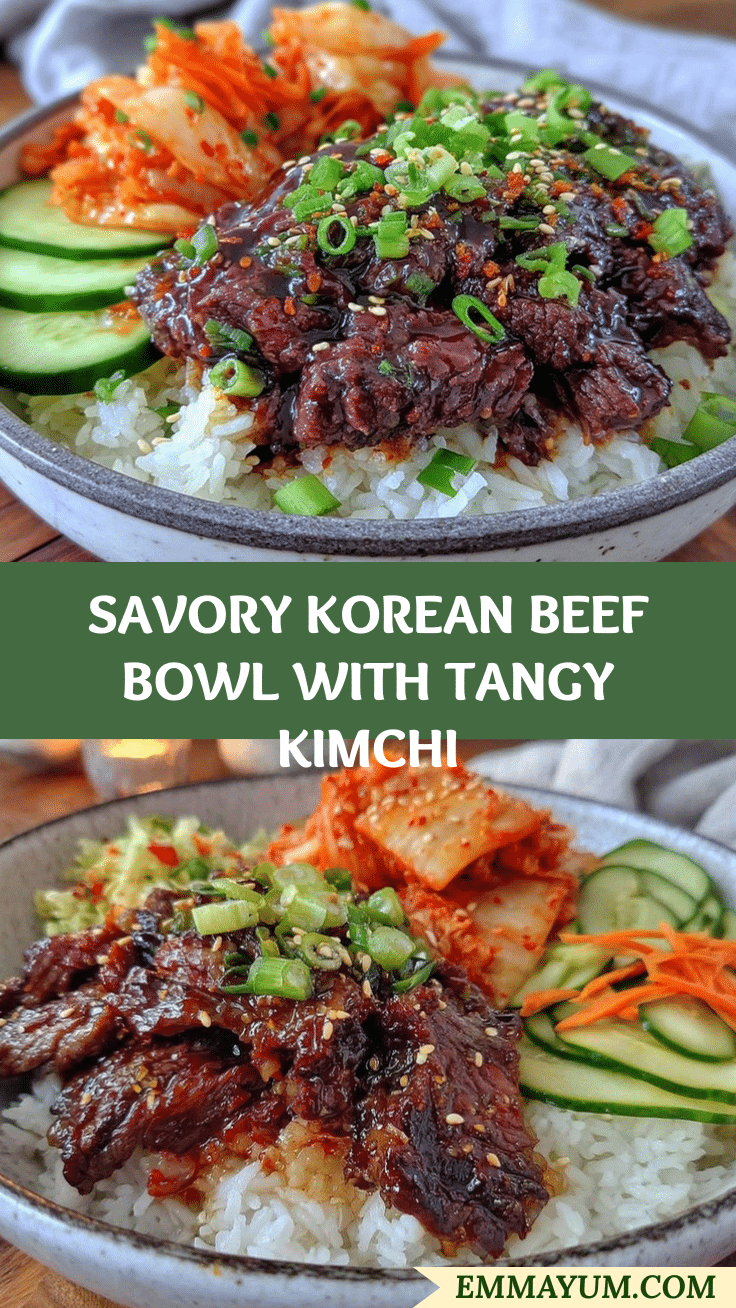
Savory Korean Beef Bowl with Tangy Kimchi
This easy 30-minute Korean beef bowl is packed with savory, sweet, and spicy flavors, topped with tangy kimchi and fresh veggies for a comforting, vibrant dinner. Perfect for busy weeknights, meal prep, or sharing with friends and family.
- Prep Time: 10 minutes
- Cook Time: 20 minutes
- Total Time: 30 minutes
- Yield: 4 servings 1x
- Category: Main Course
- Cuisine: Korean
Ingredients
- 1 lb ground beef (85% lean preferred)
- 2 tablespoons vegetable oil or sesame oil
- 4 cloves garlic, minced
- 2-inch piece fresh ginger, peeled and grated (about 2 tablespoons)
- 1/2 cup green onions, finely chopped (plus more for garnish)
- 1/3 cup soy sauce (or tamari for gluten-free)
- 2 tablespoons brown sugar (or coconut sugar)
- 1 tablespoon gochujang (optional, for heat)
- 1 tablespoon rice vinegar
- 1 tablespoon toasted sesame oil
- 1 teaspoon crushed red pepper flakes (optional)
- 2 cups cooked white rice (short grain or jasmine)
- 1 cup kimchi
- 1 medium cucumber, thinly sliced
- 1 large carrot, julienned or shredded
- 1 tablespoon toasted sesame seeds (optional)
- Optional: Fried egg (per bowl)
- Optional: Sriracha or extra gochujang
- Optional: Nori strips
Instructions
- Wash and thinly slice cucumber and julienne or shred carrot. Set aside for topping.
- Finely chop green onions, mince garlic, and grate ginger.
- Cook rice according to package instructions. For extra flavor, add a pinch of salt or splash of rice vinegar.
- In a small bowl, whisk together soy sauce, brown sugar, gochujang, rice vinegar, toasted sesame oil, and red pepper flakes.
- Heat oil in a large skillet or wok over medium-high heat.
- Add garlic and ginger, sauté for 30 seconds until fragrant. Add green onions and cook for another minute.
- Add ground beef, breaking it up with a spoon. Cook until well-browned and no longer pink, about 6-8 minutes. Drain excess fat if needed.
- Pour in prepared sauce and stir to coat beef. Simmer for 2-3 minutes until glossy and slightly thickened.
- Spoon rice into serving bowls. Top with saucy beef, cucumber slices, shredded carrot, and kimchi.
- Add optional toppings: fried egg, toasted sesame seeds, nori strips, and extra green onions.
- Serve immediately while hot.
Notes
For gluten-free, use tamari and check kimchi labels. Swap beef for tofu or plant-based ground for vegetarian. Use cauliflower rice for low-carb. Adjust gochujang and red pepper flakes for desired spice level. Keep toppings fresh for best texture. Leftovers store well; reheat beef and rice separately.
Nutrition
- Serving Size: 1 bowl (about 1/4 of
- Calories: 550
- Sugar: 10
- Sodium: 1200
- Fat: 20
- Saturated Fat: 6
- Carbohydrates: 55
- Fiber: 4
- Protein: 28
Keywords: Korean beef bowl, easy dinner, kimchi, ground beef, 30-minute meal, Asian recipe, rice bowl, gluten-free option, dairy-free, meal prep, spicy beef, comfort food