“You sure that steak’s done?” That’s the text I got from my roommate, who was hovering near the oven like it was a spaceship control panel. Honestly, I was a little skeptical too. Reverse searing ribeye steak seemed like one of those fancy chef tricks that sounded great in theory but probably took forever and ended up dry. But that night, after a long, chaotic day where nothing quite went right, I decided to give it a try anyway—mostly because the usual quick pan-sear didn’t feel like it would cut it.
So, there I was, slowly roasting the thick ribeye at low heat, watching the thermometer creep up, the kitchen filling up with this buttery, herbaceous aroma as I whipped up the compound herb butter. The whole place smelled like a steakhouse, but without the hassle or noise. When the time came to sear, the sizzle was so satisfying it nearly made me forget how tired I was.
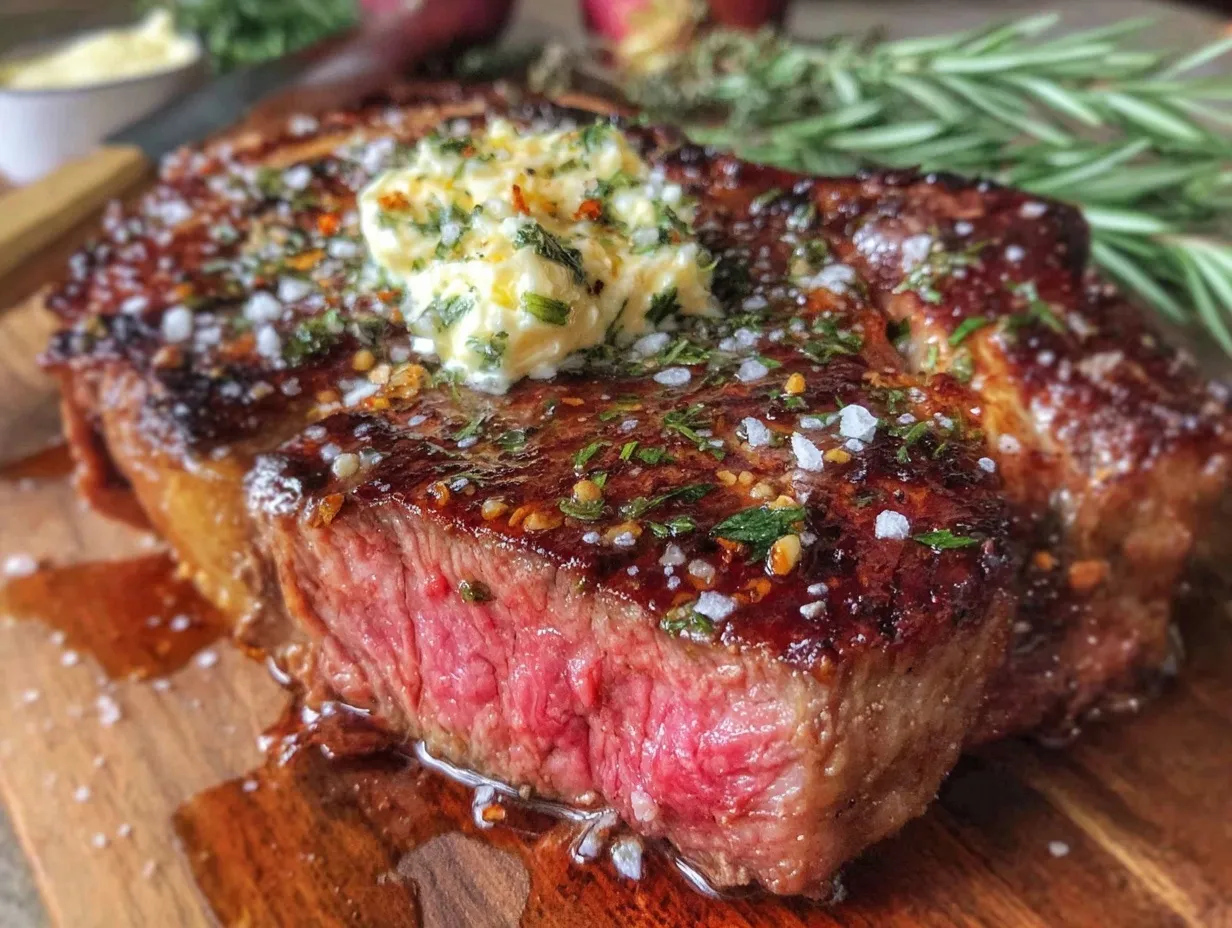
Taking that first bite—juicy, tender, with a perfectly crisp crust and the fresh punch of rosemary and garlic melting into the richness of the meat—was one of those quiet moments where you realize you just nailed something special. This recipe stuck with me because it’s not just about cooking a steak; it’s about the patience and little details that turn a simple cut of meat into a comforting, memorable meal. No rush, no stress, just a perfect piece of ribeye steak with herb butter that feels like a small celebration on a plate.
Why You’ll Love This Recipe
Making the perfect reverse seared ribeye steak isn’t just a treat—it’s a game changer for home cooks who want steakhouse quality without the guesswork. Here’s why this recipe quickly became a favorite in my kitchen:
- Quick & Easy: While it sounds fancy, the method takes about 45 minutes total, with most of that being hands-off roasting. Perfect for busy evenings when you want a special meal without fuss.
- Simple Ingredients: No need for exotic spices or hard-to-find items. You probably already have everything in your pantry and fridge—just good-quality ribeye, butter, herbs, and some basic seasoning.
- Perfect for Any Occasion: Whether it’s a quiet dinner or impressing friends, this steak fits the bill. It’s also great for date nights at home when you want something a bit more special.
- Crowd-Pleaser: From steak lovers to those who usually prefer chicken, this recipe wins everyone over. The compound herb butter adds a fresh, buttery twist that keeps people coming back for seconds.
- Unbelievably Delicious: The reverse sear method locks in juices and gives you a tender interior with a crust that’s just right—not burnt or tough, but perfectly caramelized.
What sets this recipe apart is the compound herb butter. Instead of just plain butter, mixing in fresh rosemary, thyme, garlic, and lemon zest creates a flavor burst that complements the ribeye rather than overpowering it. And the slow, low-temperature roasting before the sear guarantees even cooking, so no more cutting into your steak with crossed fingers, hoping it isn’t overdone.
Honestly, this isn’t just a steak recipe; it’s a little ritual that turns dinner into something to look forward to. It’s the kind of meal that makes you pause, savor, and maybe even share a toast (or two) while the herb butter melts luxuriously over the steak’s warm crust.
What Ingredients You Will Need
This recipe uses simple, wholesome ingredients to deliver bold flavor and satisfying texture without the fuss. Most are pantry staples, and the fresh herbs bring that next-level touch. Here’s what you’ll want to gather:
- Ribeye steak: 1 thick-cut ribeye, around 1.5 to 2 inches thick (about 12 to 16 oz / 340 to 450 g). Look for well-marbled meat for the best flavor and juiciness.
- Salt and freshly ground black pepper: generously for seasoning the steak.
- Unsalted butter: 4 tablespoons (about 60 g), softened for compound butter.
- Fresh rosemary: 1 teaspoon, finely chopped (adds a piney, earthy aroma).
- Fresh thyme: 1 teaspoon, chopped (complements rosemary with subtle floral notes).
- Garlic: 1 clove, minced (for that punch of savory depth).
- Lemon zest: from ½ a lemon (brightens and balances the rich butter).
- Olive oil or another high smoke point oil: 1 tablespoon for searing (helps create a perfect crust).
For the compound herb butter, I usually recommend quality butters like Kerrygold for a rich, creamy texture. Fresh herbs are best, but if pressed for time, dried herbs can work—just use less and crush them finely.
If you want to experiment, swapping thyme and rosemary with sage or tarragon offers a different herbal profile, but the classic combo here is what really sings with ribeye. Also, if you’re looking for a dairy-free option, you can substitute butter with a plant-based spread, though it won’t have quite the same richness.
Equipment Needed
- Oven-safe wire rack and baking sheet: For slow roasting the steak evenly without it sitting in its own juices. It’s a small detail but makes a big difference for even cooking.
- Instant-read meat thermometer: This one’s essential for nailing the perfect doneness without guessing.
- Heavy skillet or cast-iron pan: For searing the steak at the end. Cast iron is ideal because it retains heat well and gives that signature crust.
- Mixing bowl and spoon: To combine the compound herb butter ingredients.
- Plastic wrap or parchment paper: To shape and chill the compound butter before serving.
If you don’t have a wire rack, placing the steak on a crumpled piece of foil can work in a pinch, but direct contact with the pan can cause uneven cooking. I’ve learned the hard way that a good thermometer and a cast-iron skillet make all the difference, turning what can feel intimidating into something totally manageable. For budget-friendly options, a digital probe thermometer is widely available and a worthwhile investment for any home cook.
Preparation Method
- Preheat your oven: Set it to 275°F (135°C). This low temperature is key to gently bringing the steak’s internal temperature up without overcooking the outside.
- Season the ribeye: Pat the steak dry with paper towels. Then generously season both sides with salt and freshly ground black pepper. Don’t be shy—seasoning is what builds flavor.
- Set up your baking sheet: Place a wire rack on a rimmed baking sheet. Lay the steak on the rack so air can circulate, preventing sogginess.
- Roast the steak: Insert an instant-read thermometer into the thickest part of the steak. Place the baking sheet in the oven and roast until the internal temperature reaches about 110°F (43°C) for medium-rare. This usually takes about 20-30 minutes but keep an eye on it—thicker steaks might take longer.
- Make the compound herb butter: While the steak roasts, combine softened butter, chopped rosemary, thyme, minced garlic, and lemon zest in a bowl. Mix thoroughly, then shape into a log using plastic wrap. Pop it into the fridge to chill and firm up.
- Heat your skillet: When the steak reaches the target temperature, heat a cast-iron skillet over high heat. Add 1 tablespoon of olive oil and let it get shimmering hot.
- Sear the steak: Carefully place the steak in the pan. Sear for about 1-2 minutes per side, or until a deep brown crust forms. Don’t forget the edges—hold the steak with tongs and sear those too for a full crust experience.
- Rest the steak: Remove the steak from the skillet and let it rest on a cutting board for 5-10 minutes. This step lets the juices redistribute, so the steak stays juicy when sliced.
- Serve with compound herb butter: Slice the steak against the grain, then top with slices of the chilled herb butter. Watch it melt luxuriously over the warm meat—pure magic.
Pro tip: When searing, avoid overcrowding the pan to keep that perfect crust. If your steak is extra thick, consider using an oven-safe skillet and finishing the roast in the oven after searing for an even cook.
Cooking Tips & Techniques
Reverse searing can feel like a fancy method, but it’s actually one of the most forgiving ways to cook steak—if you follow a few key tips.
- Patience pays off: The slow oven roast ensures the steak cooks evenly. Rushing this step often leads to overcooked edges and underdone centers.
- Thermometer is your best friend: Relying on temperature rather than time takes the guesswork out. I’ve ruined a few steaks by eyeballing it before I trusted the thermometer.
- Don’t skip resting: Resting lets the juices settle. Cutting too soon will let all that good juice run out on your cutting board.
- High smoke point oil: Use oils like avocado, canola, or grapeseed for searing. Butter alone burns too fast at high heat.
- Don’t crowd the pan: Searing in batches if cooking more than one steak keeps the crust crisp rather than steamed.
- Compound butter chill time: Letting the herb butter firm up in the fridge makes slicing easier and keeps flavors bright when served.
And honestly, sometimes I’ve rushed the sear and ended up with a steak that tasted good but wasn’t quite the perfect crust I wanted. Slow down, crank the heat, and savor the sizzle—it’s worth it. Plus, multitasking is key: while the steak roasts, I usually get started on sides or even prep a quick dessert like the cookies and cream ice cream that pairs surprisingly well with a rich steak dinner.
Variations & Adaptations
This recipe is pretty flexible, so you can tweak it to suit your taste or dietary needs.
- Herb Butter Swaps: Try swapping rosemary and thyme for basil and oregano for a Mediterranean twist. Or add a pinch of smoked paprika for a subtle smoky flavor.
- Different Cuts: While ribeye is my go-to for marbling and flavor, this method works beautifully with strip steak or filet mignon. Adjust cooking times depending on thickness.
- Dietary Adjustments: For dairy-free, use a vegan butter substitute mixed with herbs. For lower sodium, reduce salt on the steak and boost herb quantities for flavor.
- Cooking Methods: If you don’t have an oven, you can do a sous vide cook at 130°F (54°C) for 1-2 hours, then sear in a hot pan for that crust. It’s an extra step but foolproof.
- Spicy Kick: Add a pinch of cayenne or chili flakes into your compound butter for a subtle heat that complements the rich beef.
Once, I tried adding a little blue cheese to the herb butter—it was unexpectedly good, creamy with a sharp tang that cut nicely through the ribeye’s richness. Totally worth a try if you want to impress guests or just treat yourself.
Serving & Storage Suggestions
Serve your reverse seared ribeye steak immediately after resting and topping with the compound herb butter. The butter melts over the steak beautifully, creating a glossy, flavorful finish.
This steak pairs wonderfully with simple sides like roasted vegetables, mashed potatoes, or even a crisp green salad. For a cozy meal, I love serving it alongside creamy dishes like the slow cooker potato soup—the creamy texture balances the steak’s robust flavor.
To store leftovers, wrap the steak tightly in foil or plastic wrap and refrigerate for up to 3 days. Reheat gently in a low oven (about 250°F/120°C) until warmed through to avoid overcooking. Adding a little extra compound butter while reheating keeps the steak moist and flavorful.
Flavors actually deepen the next day, so if you can wait, leftovers make for an even more satisfying meal. Just slice cold for steak salads or sandwiches, or reheat carefully for dinner.
Nutritional Information & Benefits
A 12-ounce (340 g) ribeye steak typically has around 800 calories, with approximately 60 grams of protein and 60 grams of fat, depending on marbling. The compound herb butter adds richness but also brings in antioxidants from fresh herbs like rosemary and thyme.
This meal is high in protein and iron, essential for muscle repair and energy, making it a solid choice for active lifestyles. The herbs contribute vitamins A and C and have anti-inflammatory properties.
Keep in mind this recipe is naturally gluten-free and suitable for low-carb diets. If you’re watching saturated fat intake, you might opt for leaner cuts or reduce the butter amount—but honestly, the occasional indulgence feels justified when it tastes this good.
Conclusion
This perfect reverse seared ribeye steak with compound herb butter is more than just a recipe—it’s a little kitchen win that turns a simple steak dinner into a memorable experience. The gentle roasting, the sizzling sear, and that buttery, herby finish come together in such an effortless way that it quickly becomes a go-to for special occasions or any night you want to treat yourself.
Feel free to customize the herb butter or try different cuts to find your favorite combo. I love how this method takes the stress out of steak cooking, so even if you usually stick to easier meals like the honey garlic pork chops, this one’s worth a shot when you want to up your game without the hassle.
Give it a try, and let me know how your steak turns out—there’s something truly satisfying about mastering a recipe that feels fancy but is totally doable at home. Here’s to many delicious meals ahead!
Frequently Asked Questions
What is reverse searing, and why is it better for ribeye?
Reverse searing means cooking the steak slowly at low heat first, then finishing with a hot sear. This method cooks the steak evenly inside and creates a perfect crust without overcooking the outer layers.
How do I know when the steak is done?
Using an instant-read thermometer is the easiest way. For medium-rare, aim for an internal temperature of about 130°F (54°C) after resting. The steak will continue to cook slightly while resting.
Can I use frozen ribeye for this recipe?
It’s best to use fresh or fully thawed ribeye. Cooking from frozen can lead to uneven cooking and a less desirable texture.
How long can I store the compound herb butter?
Wrapped tightly, the compound herb butter keeps in the refrigerator for up to 1 week or can be frozen for up to 3 months.
Can I make this recipe dairy-free?
Yes! Substitute the butter with a plant-based spread or dairy-free margarine and mix in the herbs as usual.
Pin This Recipe!
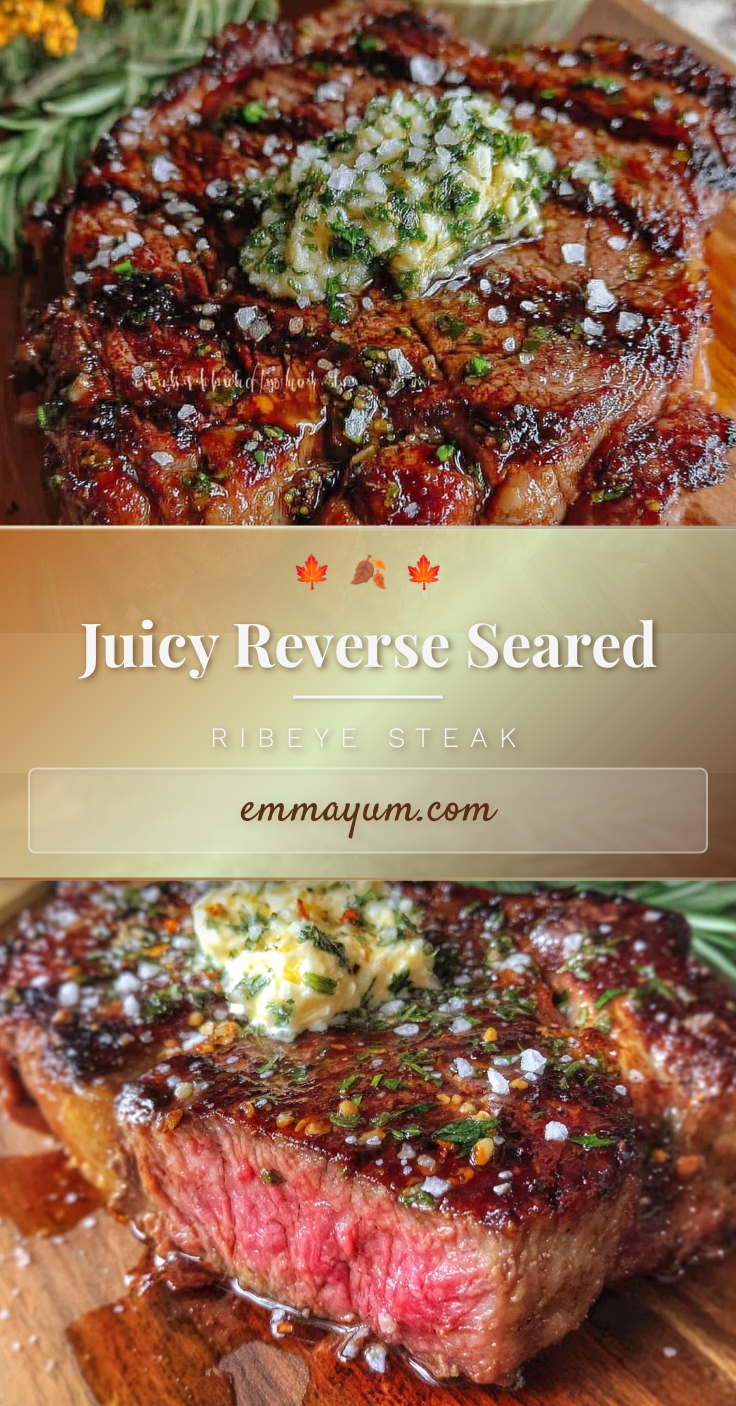
Perfect Reverse Seared Ribeye Steak Recipe with Easy Herb Butter
This recipe delivers a juicy, tender ribeye steak with a perfectly crisp crust using the reverse sear method, complemented by a flavorful compound herb butter made with fresh rosemary, thyme, garlic, and lemon zest.
- Prep Time: 10 minutes
- Cook Time: 30 minutes
- Total Time: 40 minutes
- Yield: 1 serving 1x
- Category: Main Course
- Cuisine: American
Ingredients
- 1 thick-cut ribeye steak, 1.5 to 2 inches thick (12 to 16 oz / 340 to 450 g)
- Salt, generously for seasoning
- Freshly ground black pepper, generously for seasoning
- 4 tablespoons unsalted butter (about 60 g), softened
- 1 teaspoon fresh rosemary, finely chopped
- 1 teaspoon fresh thyme, chopped
- 1 clove garlic, minced
- Lemon zest from ½ a lemon
- 1 tablespoon olive oil or another high smoke point oil (avocado, canola, grapeseed) for searing
Instructions
- Preheat your oven to 275°F (135°C).
- Pat the ribeye steak dry with paper towels. Generously season both sides with salt and freshly ground black pepper.
- Place a wire rack on a rimmed baking sheet and lay the steak on the rack to allow air circulation.
- Insert an instant-read thermometer into the thickest part of the steak. Roast in the oven until the internal temperature reaches about 110°F (43°C) for medium-rare, approximately 20-30 minutes.
- While the steak roasts, combine softened butter, chopped rosemary, thyme, minced garlic, and lemon zest in a bowl. Mix thoroughly, shape into a log using plastic wrap, and chill in the fridge.
- Heat a cast-iron skillet over high heat and add 1 tablespoon of olive oil. Let it get shimmering hot.
- Sear the steak in the hot skillet for 1-2 minutes per side until a deep brown crust forms. Also sear the edges by holding the steak with tongs.
- Remove the steak from the skillet and let it rest on a cutting board for 5-10 minutes to allow juices to redistribute.
- Slice the steak against the grain and top with slices of the chilled compound herb butter. Serve immediately.
Notes
Use a digital probe thermometer for best results. Avoid overcrowding the pan when searing to maintain a perfect crust. Let the compound herb butter chill to firm up before slicing. For dairy-free, substitute butter with plant-based spread. Rest steak after searing to keep it juicy. If steak is extra thick, consider finishing in the oven after searing.
Nutrition
- Serving Size: 1 ribeye steak (12-1
- Calories: 860
- Sodium: 600
- Fat: 64
- Saturated Fat: 30
- Carbohydrates: 1
- Protein: 60
Keywords: reverse sear, ribeye steak, herb butter, steak recipe, easy steak, compound butter, cast iron skillet, steakhouse quality